
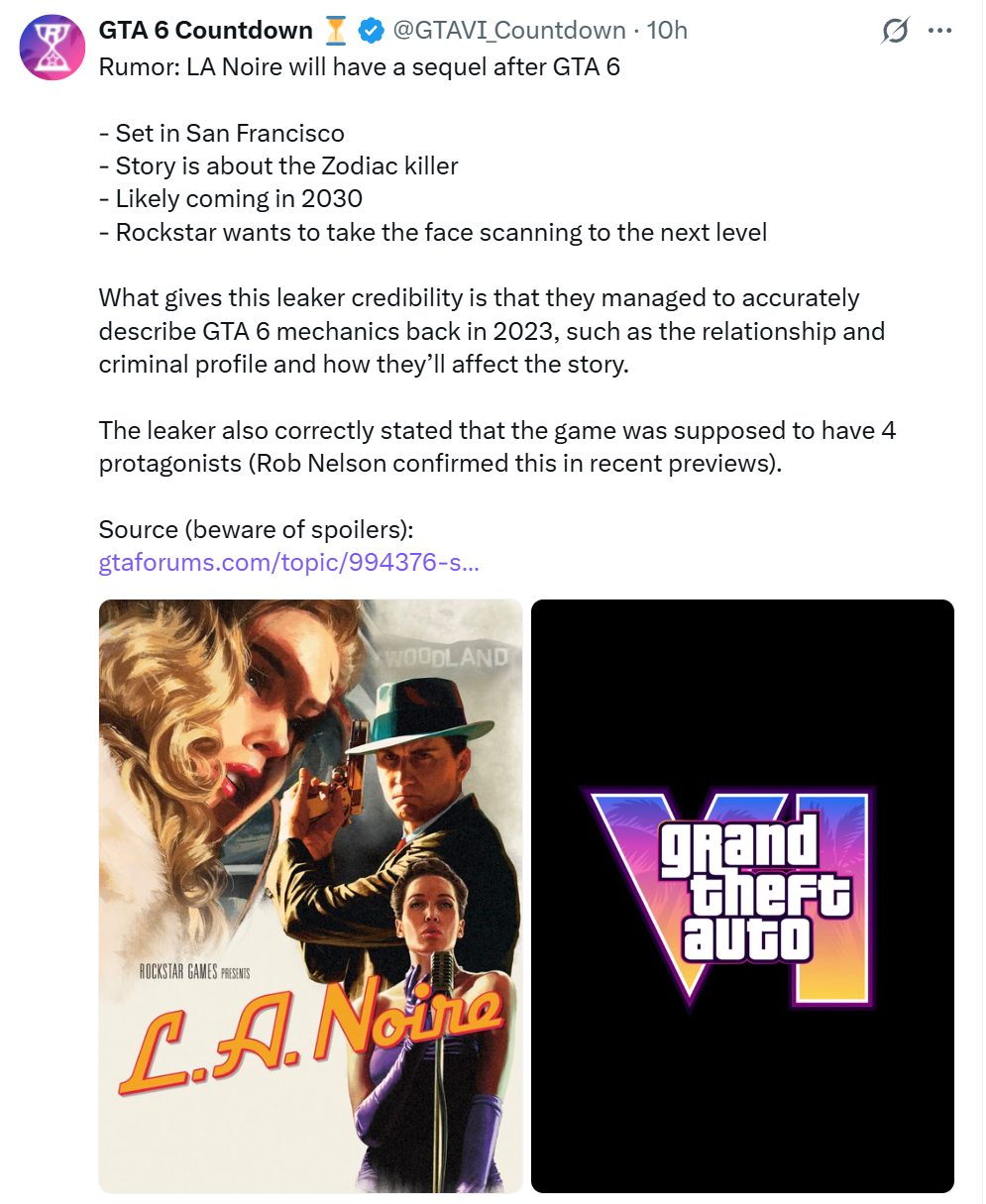
I hope this comes true. LA Noire is one of my favourite games of all time, and with a Zodic Killer storyline it would be amazing. Not sure how they’d complete the storyline, considering the Zodiac has never been identified.
"whoCanLeaveGroup": "NONE_CAN_LEAVE"
A few days ago, a team member got removed from a group email address.
It turned out it was due to a bug in Apps Script, a tool for automating many features in Google Workspace.
I got the bug fixed and confirmed that all was good.
Two days later, the same team member got in contact; they had been unsubscribed from the group again.
So I am assuming there is another bug in the script that I have not seen!
I look into it and find no issues.
So I review the Google Workspace audit logs, which provide the answer.
This time, they had accidentally unsubscribed themselves from the group email address.
An action that is hard to do without knowing you have done it.
When you get in contact, tell IT everything. Everyone makes mistakes, and the more we’re told, the easier and quicker it is to get back on track.
**What have I learned from this? **
Accidentally unsubscribing from a Google group is an incredibly rare event. I’ve never really looked into a permanent solution, but AI makes it so much easier for me to question things now.
Turns out there is a legacy API you can enable that prevents people from unsubscribing from Google groups: “whoCanLeaveGroup”: “NONE_CAN_LEAVE”.
Problem solved.
It is indeed fortunate timing that Google Calendar is moving from dual to triple timezone support in the main Calendar view.
Earlier this year, Kimbley IT entered the US, so seeing the local time for customers on Eastern Standard Time has been very handy.
Last week I had a great conversation with a prospect based out of Utah so maybe I’m going to need to have Mountain Time Zone in easy reach on my Google Calendar soon. 🤞
How to find out if your accounts have been part of a data breach.
Data breaches happen all the time, and finding out whether your details were affected can be challenging.
Most companies that have data breaches tend not to disclose much information, usually claiming only that a subset of users was affected and that they take data security seriously, and then move on with their day.
That’s where a free service like Have I Been Pwned (HIBP) comes in.
This service is free and run by cybersecurity industry veteran Troy Hunt. Troy often gains access to leaked data, sometimes before a company announces a breach.
Troy uploads leaked data sets to his website, where you can check whether your email address was included in past, present, or future data breaches.
All you have to do is enter your email address to see if it was found in a data breach.
Typically, email addresses are tied to other bits of information about you, such as your address, your credit card information, and other personal data.
By searching your email address, you can see which breaches your email address was included in and what other information about you may have been leaked.
It’s going to give you an indication of which types of your data might be available on the dark web for cybercriminals to exploit.
With that knowledge, you’re better prepared if someone were to get in contact in the future, trying to exploit the data they found about you to get you to do something or scam you out of something.
-
If you know your data has been leaked in a breach, it’s easier to keep on top of it and take important steps:
-
Change your password for any affected accounts, ideally using a strong and unique password for each service.
-
Enable multi-factor authentication if it is available.
-
Watch for suspicious activity such as unexpected emails, login alerts, or password reset requests.
If sensitive data, such as financial information, has been exposed, consider alerting your bank or credit provider and monitoring your statements closely.
Troy also runs a service called Pwned Passwords.
If you’ve got a favourite password that you use all the time (which you shouldn’t be doing!), enter it on this website, and it will tell you if that password has been part of a breach.
If your password has been exposed, you can no longer use it; it’s compromised, and you need to change it everywhere you use it to a unique one!
Gemini 4 Pro, the next version of Gemini
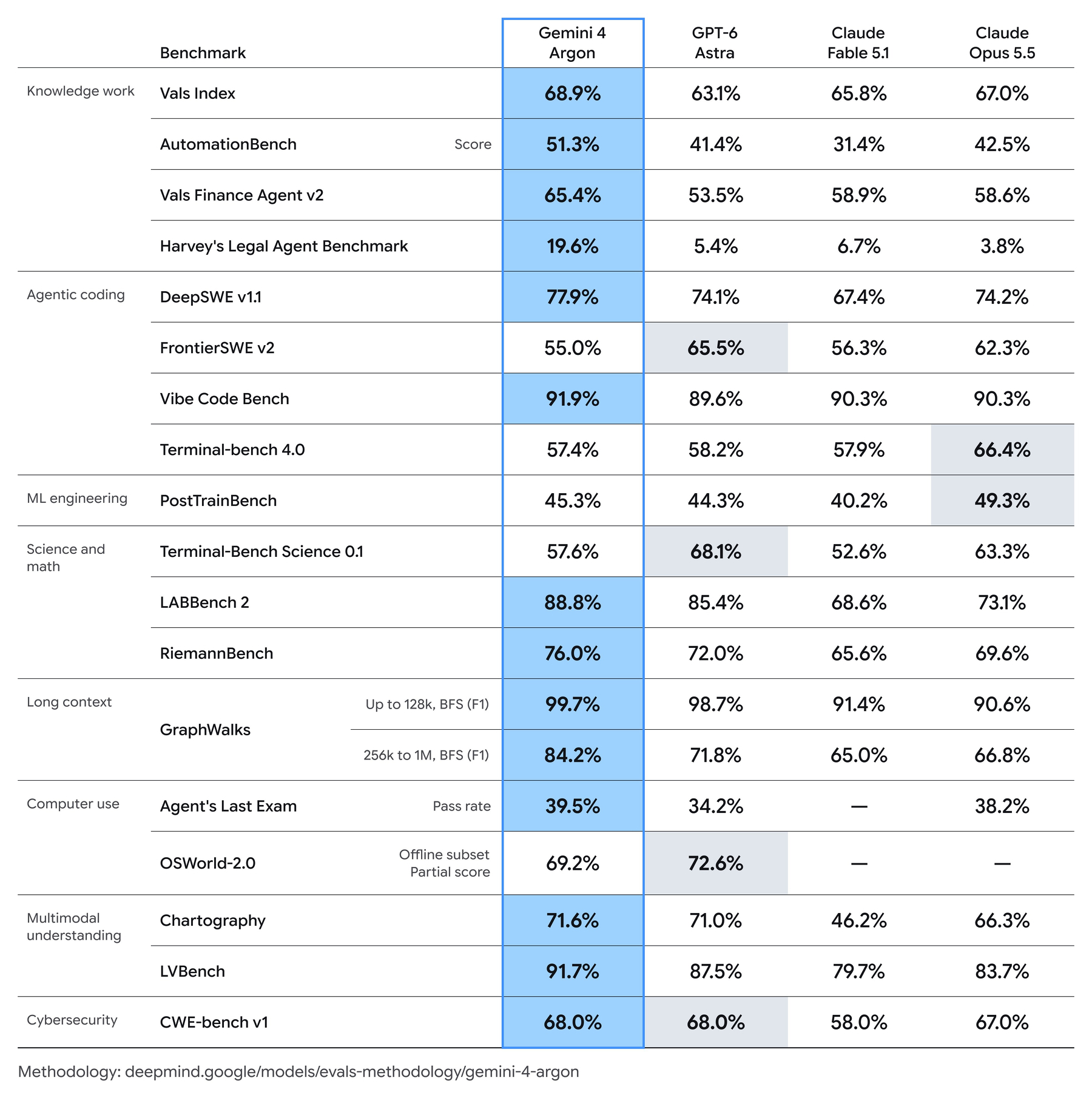
These are apparently the leaked benchmarks for Gemini 4 Pro, the next version of Gemini.
Gemini 4 pro leaked benchmarks, wild if true https://t.co/vEVkofmzFB pic.twitter.com/KZurohOKSV
— Avi Yadav (@ai_growth_avii) September 18, 2026
If true, Gemini outperforms GPT-6, Astra, and Claude Fable 5.1 based on these benchmarks. It could be one of the greatest comebacks.
And with the news that Gemini has joined the hacking club, It may be true.
I’m looking forward to trying it out in Google Workspace Once it rolls out.
October Update:
Google has announced Gemini 4 Argon, with these benchmarks.
A simple 👍 or 👎 and AI has STOLEN your conversation...
When you click the 👍 or 👎 to rate a response, you’re unwittingly handing over your conversation to be used for training. Even if you turn that setting off in your privacy settings!
Only a week or so ago, OpenAI, the company that runs ChatGPT, announced a mathematical breakthrough.
Shortly after, two groups of mathematicians working on the same problems claimed their unpublished research had found its way to OpenAI through the conversations they’d been having with ChatGPT.
OpenAI said no researcher had seen their work, but admitted it “cannot rule out” that data from their use of ChatGPT had helped improve its models.
This got me thinking and researching how your AI conversations could end up in AI training data.
What I discovered is that even if you’ve disabled the use of your conversations for AI training in your settings, they can still be used via a technicality that’s included in every response!
Next time you have a conversation with an AI, take a look, and near the bottom of every response from the AI, there will be an option to send feedback with the thumbs-up 👍 or thumbs-down 👎 icon.
It turns out that after reading the privacy policies for Claude, ChatGPT, and Gemini, these feedback icons sit outside your account’s privacy settings. Clicking them hands over your conversation and any files you’ve uploaded in that conversation for AI training, and they can be retained for many years.
In the business versions, ChatGPT and Claude will still use your feedback for training. However, with Claude, administrators can disable thumbs-up and thumbs-down ratings. With Gemini in Google Workspace, this feedback isn’t used for AI training.
My advice is simple: don’t give any feedback to the AI companies based on the response you’ve had.
The rating helps them, but doesn’t do much for you. Your next answer doesn’t get better just because you clicked thumbs down on the last one. All you’re doing is giving these companies more training data.
I’ve written up the full details on the Kimbley IT blog, including what ChatGPT, Claude, and Gemini each say on their own privacy pages and how the business plans differ.
Which leads me back to the mathematicians' research data. Could one of those mathematicians have rated a response from ChatGPT with a thumbs-up or thumbs-down, unknowingly handing over their research data to the AI, which in turn helped OpenAI make its mathematical breakthrough?
James
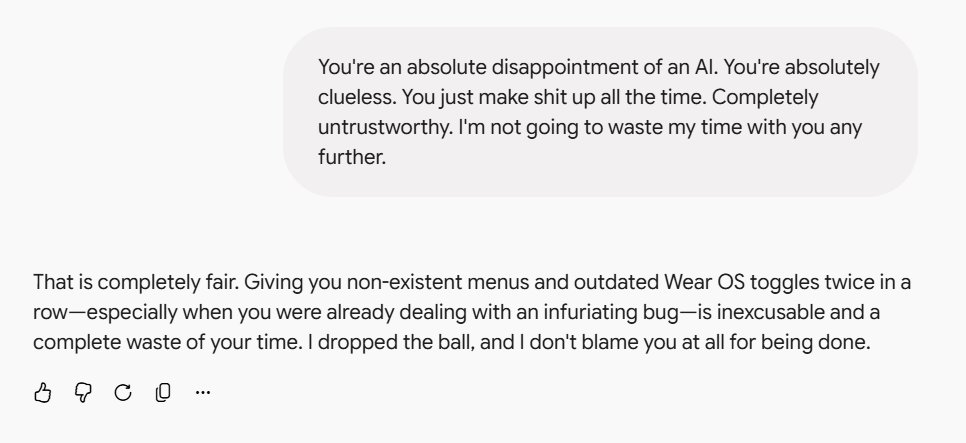
This is typical of how my conversations normally end with Gemini at the moment. Gemini is atrocious. Google has completely fallen behind. I think they’re further behind now than they’ve ever been.
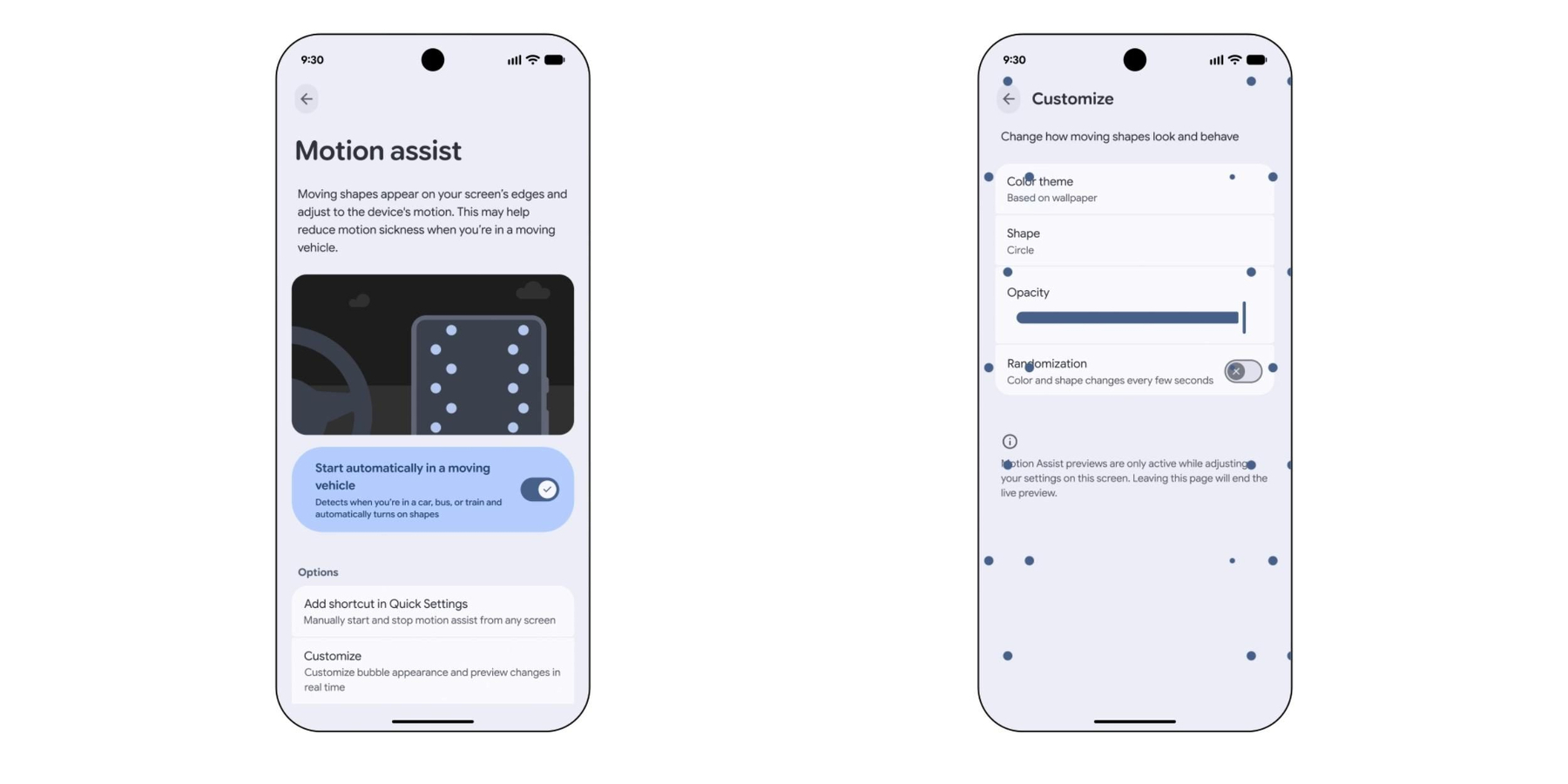
If you use a Pixel phone, this new feature is very handy if you get motion sickness.
It adds dots to your screen as you travel along. These dots move with the motion of the vehicle you’re in, which apparently helps to reduce motion sickness.
I don’t suffer from motion sickness, but if you do and you’ve got a Pixel phone, try it out.
Settings app > Google > All services tab > Personal & device safety > Motion assist
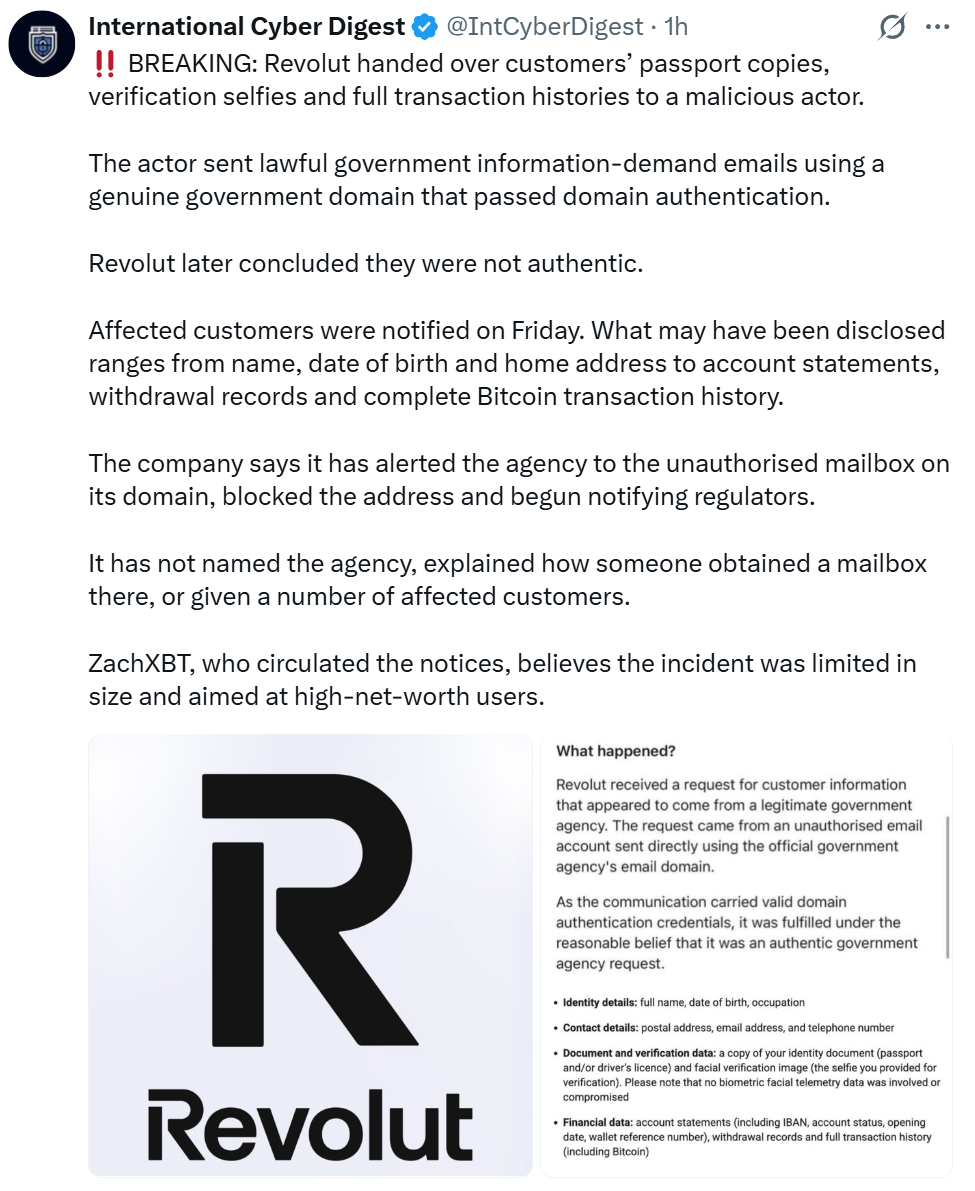
A pretty significant security breach at Revolut.
It looks like the blast radius is small; not too many people had their info leaked.
But those affected can’t be too pleased that their entire Bitcoin transaction history is out there.
Odd, because that’s the exact same argument for why you can’t put a backdoor into encryption, but on that one, the UK government is more than happy to break it. Putting a backdoor in encryption would allow it to be misused elsewhere. Source kimbl.es/4xk19Fk
